March 17, 2026

Assets
These assets are in-licensed from WuXi Biologics under an exclusive development and global commercialization agreement.
HWK-007
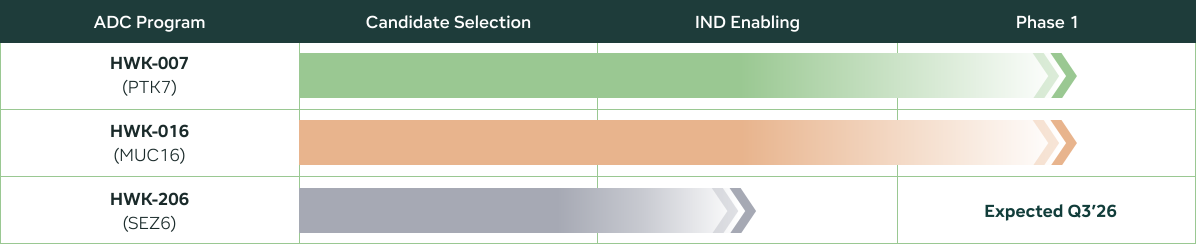
HWK-007 represents a differentiated opportunity to be among the first next-wave ADCs in clinical development for high Protein Tyrosine Kinase 7 (PTK7) expressing cancers.
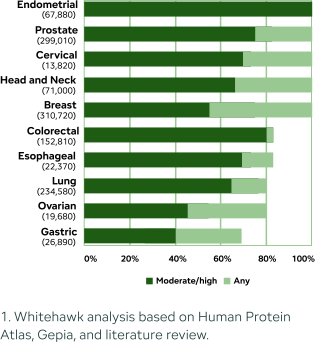
PTK7 is an oncofetal transmembrane pseudokinase that drives early embryonic development, has restricted expression in adult tissues and frequent overexpression in a wide range of cancers. Pfizer’s first-generation ADC, cofetuzumab pelidotin provided proof of concept for PTK7-targeted ADCs.
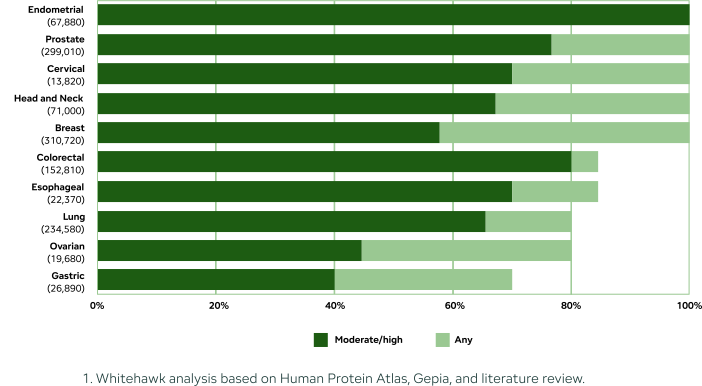
PTK7 is the third most highly expressed tumor marker among clinically validated and emerging ADC targets, present in ~70% of tumors. There are no approved PTK7-directed ADCs.
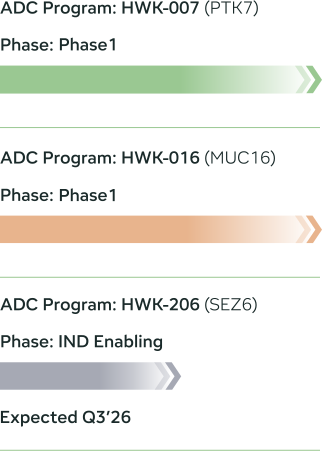
HWK-007 is being evaluated in a Phase 1 trial that will initially evaluate activity in lung and ovarian cancers, two PTK7-expressing tumor types with established precedent data, as well as endometrial cancer, one of the highest PTK7-expressing tumor types. We expect data to readout in the first half of 2027.
PTK7 Expression Across Solid Tumors1 (Annual US Incidence)
HWK-016
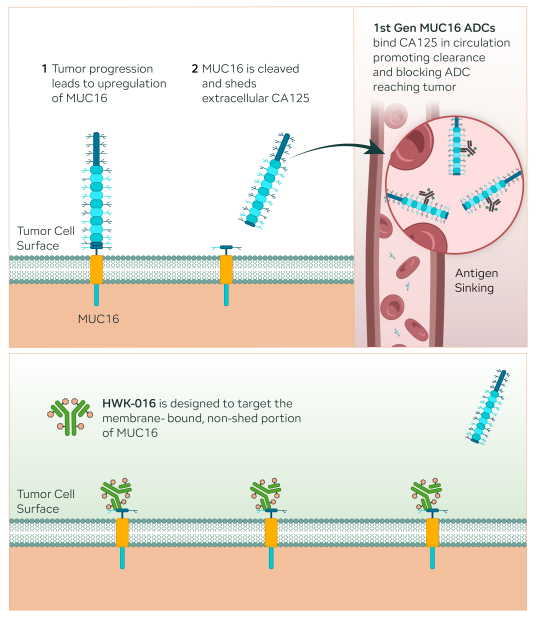
HWK-016 is potentially the first ADC that targets the membrane-bound portion of Mucin 16 (MUC16), a glycoprotein with low level of expression in normal adult tissues that is “super expressed” in gynecological cancers, including ovarian, endometrial and cervical cancer. In ovarian cancer, for example, MUC16 is present at rates up to 3-10 times higher than clinically validated and emerging ADC targets.
MUC16 is clinically validated, including by Genentech’s ADC program that targets the shed portion of MUC16. Shed MUC16 (CA125) is a validated biomarker for cancer screening and disease monitoring in gynecologic cancers. When ADCs bind to this cleaved portion of the MUC16 protein in circulation, it is cleared from the patient systemically rather than reaching the tumor. HWK-016 is designed to overcome this by directly targeting the membrane-bound, non-shed portion of MUC16.
HWK-016 is currently being evaluated in a Phase 1 trial that will initially evaluate activity in in two high MUC16-expressing gynecologic cancers, ovarian and endometrial. We expect data to readout in the first half of 2027.
HWK-206
HWK-206 is designed to address the clinically validated neuronal target seizure protein six (SEZ6), which is often overexpressed in cancers of neuroendocrine origin.
SEZ6 is a CNS-limited protein overexpressed in tumors of neuroendocrine origin, including small cell lung cancer (SCLC), other neuroendocrine neoplasms, and some CNS tumors.
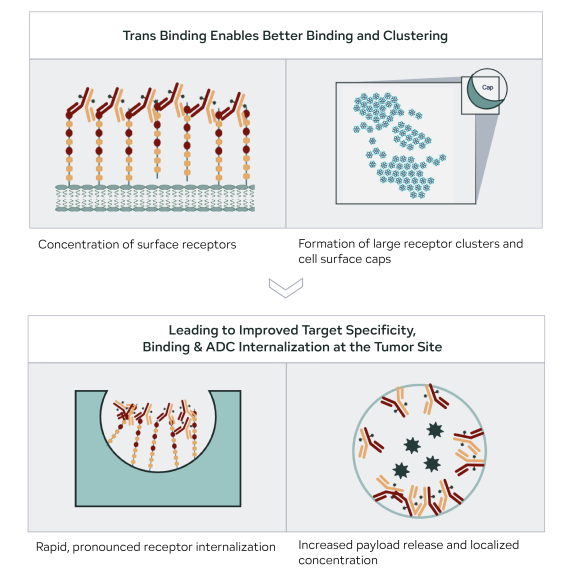
HWK-206 utilizes a dual epitope binding, or biparatopic, approach which can potentially improve internalization and effectiveness of the ADC. HWK-206 is the only biparatopic ADC in development for small cell lung cancer. In preclinical models, HWK-206 has demonstrated the potential to outperform available treatment approaches and other single epitope ADCs in development.
HWK-206 is currently being evaluated in IND-enabling studies. An IND submission for HWK-206 to explore SCLC and neuroendocrine tumors is planned in mid-2026, with a Phase 1 start planned in Q3 2026.